Jose's India Travel Newsletter
L A D A K H

 Introduction Delhi Leh/Ladakh Kashmir
|
Ladakh Section 1 Ladakh: Section 1 I Section 2
Leh
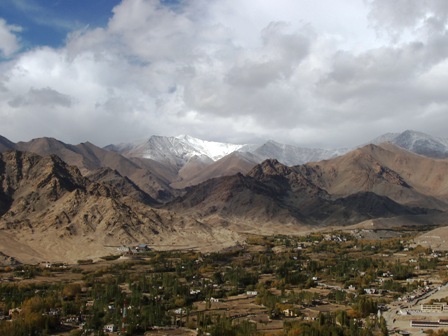
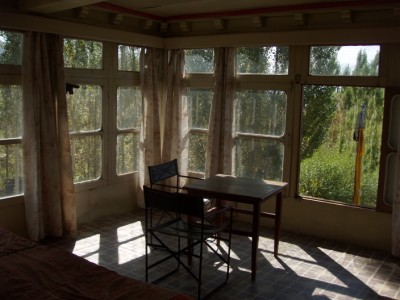
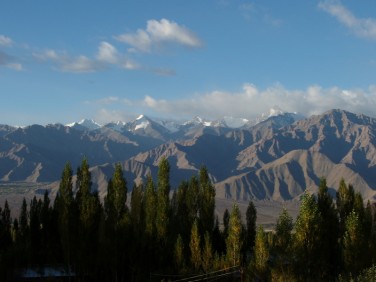
I landed in Leh at 7:00am, a bit cold and at first glance, Leh looks like a barren desert in the middle of the Himalayas…well it is! I wondered if I had made a mistake, but there I was. I had no hotel and was not sure how to get into town or where it was. I met Ute, who is from Germany, in the terminal, and she was staying here for 10 days. I asked her if she wanted to share a taxi and she said yes. She did not have a hotel either so we decided to try out the Oriental Guest house from her guide book…wow that was a good choice. I got a great room with windows on two sides and an incredible view of the Himalayas, indoor shared toilet and a shower with hot water. Well, lo and behold, Ute and I became instant travel buddies.
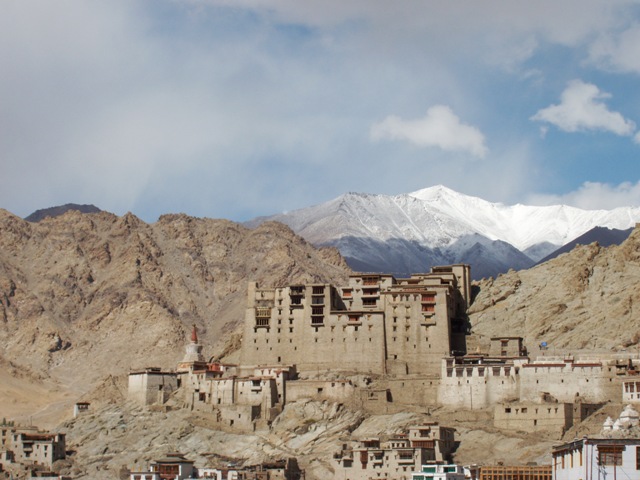
Leh Palace in the middle of town.Leh is the capital of Ladakh and the largest city in the province with 20,000 people. It was the 2nd of October, Gandhi’s birthday, and the streets were quiet; most tourists had left because the season ended early in September. From Leh there are many places to go, the Buddhist monasteries, called “Gompas” in Ladakhi, the Nubra Valley, Pangong Tso Lake, Zanskar, and there are all kinds of trekking trails throughout the Himalayas. You can hire a tourist jeep to go to these places or get on a local bus. The union sets a fixed cost for these jeeps, so if you go with others, you split the cost.
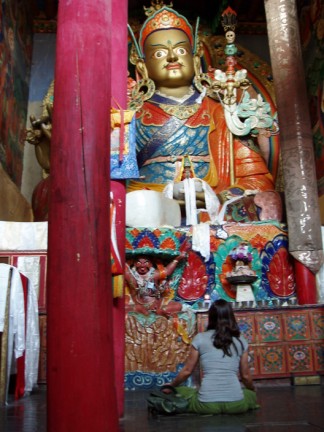
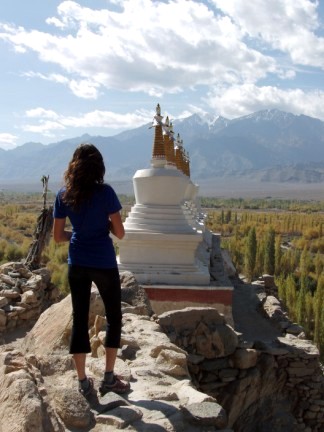
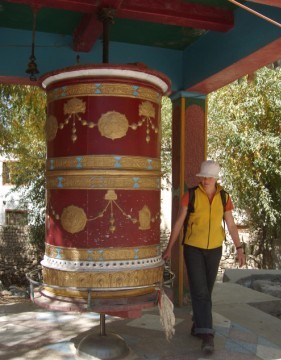
Cori meditating at Hemis Monastery Sita by one of the Sutpas at Shey Ute turning the prayer wheel clockwise in Leh.The Monasteries, Shey, Hemis and Thiksey
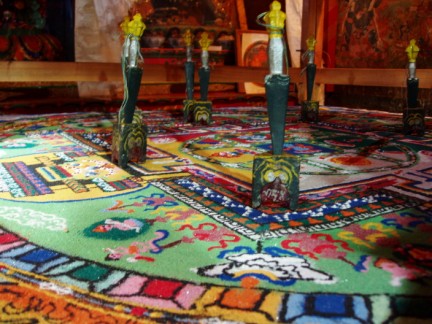
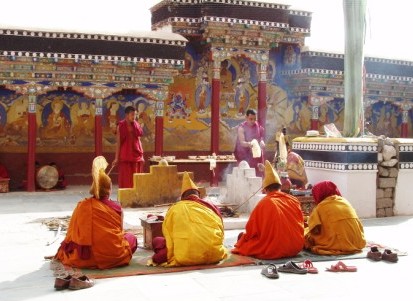
On our first trip, after two days of acclimatizing to the altitude, 3,500 meters or 11,300 feet, a group of us when off to the some of the monasteries: Cori and Sita, are both from Hawaii; Ed from Vancouver, who is in search of spotting and photographing the famous but elusive Himalayan snow leopard; a guy from Denmark and Ute and I. We visited Shey, Hemis and then Thiksey. At Thiksey, they were having a ceremony where they burned a Mandala, it was very interesting, tribal in a way. I like Thiksey the best and they have rooms in the monastery where you can stay.e
This mandala probably took months to make, some can take up to a year. It is then burned as a symbol that nothing is permanent.
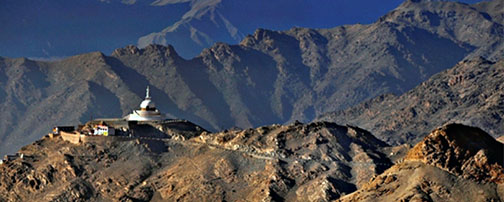
Ceremony where they burn the mandala at Thiksey Monastery.In addition to the monasteries, there are thousands of “Stupas” and hundreds of kilometers of “Om Ma Ni Pad Me Hum” walls. A stupa is a shrine that contains holy Buddhist relics and or special writing on enlightenment. These stupas are made from rocks, mud bricks and most recently they are covered with concrete. These containers are then seaedl inside the stupa never to be opened or disturbed. Then when one walks by one of them and repeats the “om ma ni pad me hum” mantra, (prayer), the person is blessed and receives the good karma from these holy relics and writings. Stupas come in all shapes and sizes, some of the smaller ones are about two meter high, (six feet) and the big “Shanti Stupa” in Leh, is several stories high.
Shanti Stupa in Leh built by a Japanese monk
The Sham Trek, also known as the “Baby Trek”
At dinner one evening, I was listening to this French guy talking about a trek he had done going from village to village over the passes and through the valleys in the Himalayas. It was a three day trek and he stayed and ate in village homes. I told Ute that he was a lot more adventurous then I. The following day, two ladies that were older than I, told me that they were going on the same trek. I told Ute that if they could make it, so could we. We headed to town to get some more info and at the tourist office the lady wrote out the map of the trek on a piece of paper.
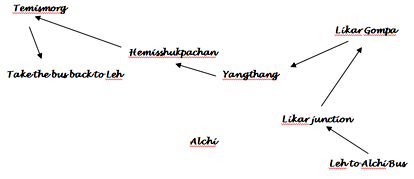
“Take the 8:00am bus to Alchi from the new bus station, get off at the Likar junction, head to the Likar Gompa, follow the path to Yangthang, stay overnight there at someone’s home. Next day head to Hemisshukpachan, overnight and then head to Temismorg on the third day. Overnight there and then take the bus back to Leh.”
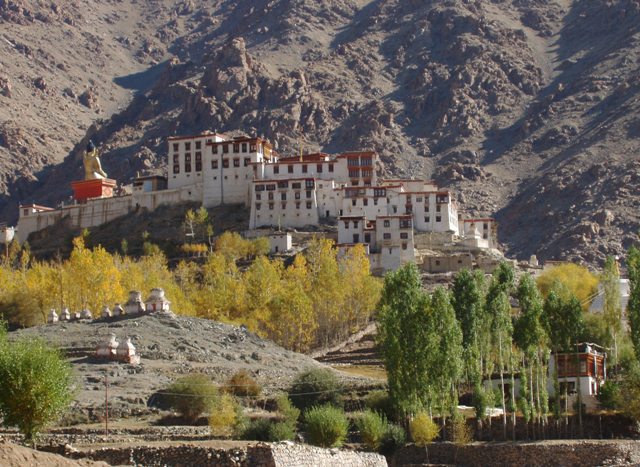
The Likar Gompa
|
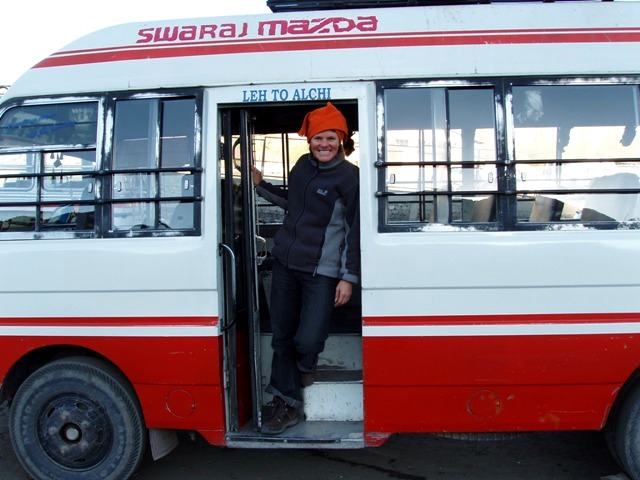
Well that sounds simple, but we did not know where the new bus station was in Leh. The next day, we took a taxi to the new bus station early the morning and asked everyone which was the bus to Alchi. After some misinformation, we got on the bus. Afterwards we noticed that the bus had a sign on it “Leh to Alchi” After 2 ½ hours of a bouncy and sometimes a real nail bitter ride, we got off the bus at the Likar junction. This was literally in the middle of nowhere. We just could not believe we were here and we really did not have a clue which way to go. Ute and I just looked at each other and laughed. However, there was a woman that also got off the bus and was going to Likar. We figured she knew the way so we followed her. When we got to village of Likar, we could see the monastery off in the distance. We kept walking and walking but we did not seem to get closer. Ute said that the air is so clear up here that things seem closer than they really are. I carried small school size backpack and Ute had a larger trekking backpack with a sleeping bag, lots of water and all that stuff. Most people would use an umbrella to protect them from the rain. But, I used my umbrella, for trekking, it’s great to keep the sun off. I just got a small cheapie one from the Dollar Store, it really worked. We stopped along the way to have lunch and by the time we reached the monastery, it was past two in the afternoon. To my surprise, there was a huge statue of a golden sitting Buddha next to the monastery…five or six stories high. Ute knew all about it, she had read her guide book. Since we were not covering much ground and it could get late on us, we decided to stay in Likar instead of trying to make it to Yangthang. One thing that we did not want to happen was to get caught out here at night in the middle of the Himalayas, we are amateurs. So, with this change in plans, it meant that we would probably not make it to our last destination. We hung out around the monastery and spoke with some of the monks. Then, we got a room at Yangdo’s home right next to the monastery. She fed us a very nice dal (lentils with spices) and rice dinner with tea. |
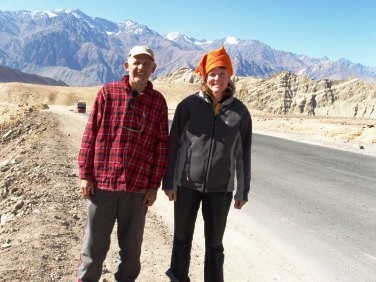
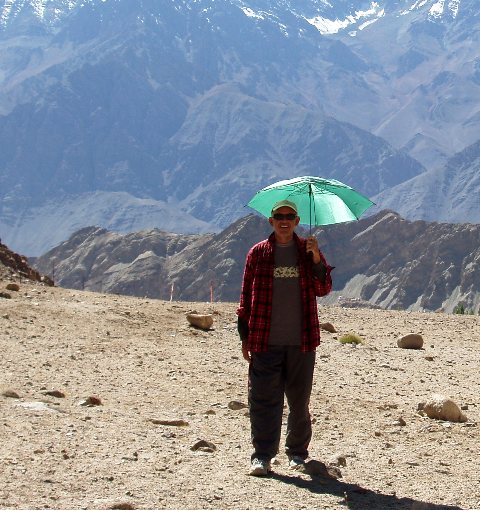
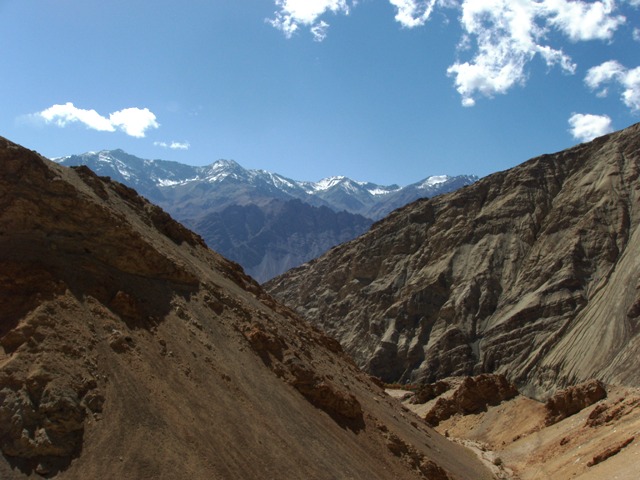
The next morning we headed out early hoping to make up some ground and make it to Yangthang and on to Hemisshukpachan. Well the path is not well marked so along the way we kept asking villagers for the short cut to Yangthang. Eventually we ended up on the path. But we soon discovered that there are many paths going everywhere. We started to keep a lookout for rock piles from other trekkers and electricity poles; we figured that they had to lead to the next village. At times it seemed as if we were lost in the middle of nowhere and I remember thinking, “what if something goes wrong, we have not seen anybody else out here”…well at least Ute and I could depend on each other. Around noon we were getting hungry. I spotted a house on the other side of the river and we went over to see if we could get some tea…scored big, got tea and hot noodle soup! We did not get the lady’s name but, thanks and “Julay”.
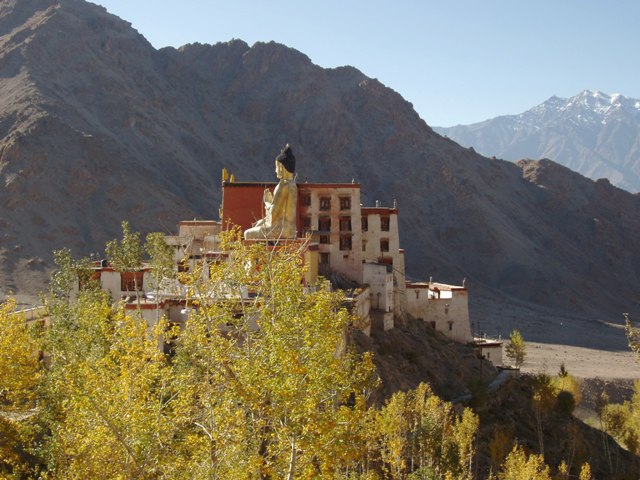
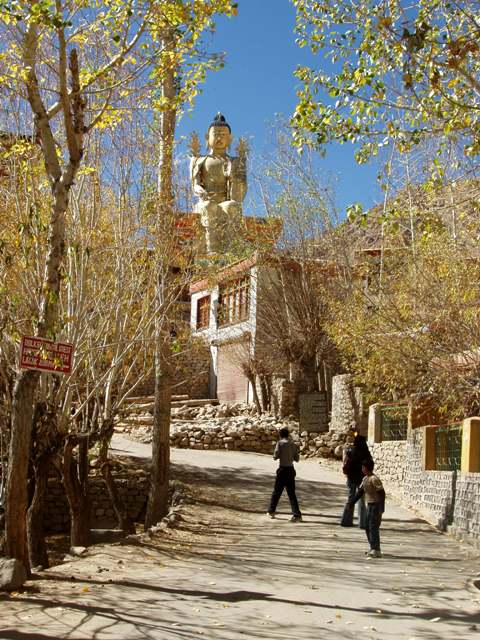
Golden sitting Buddha at Likar Gompa
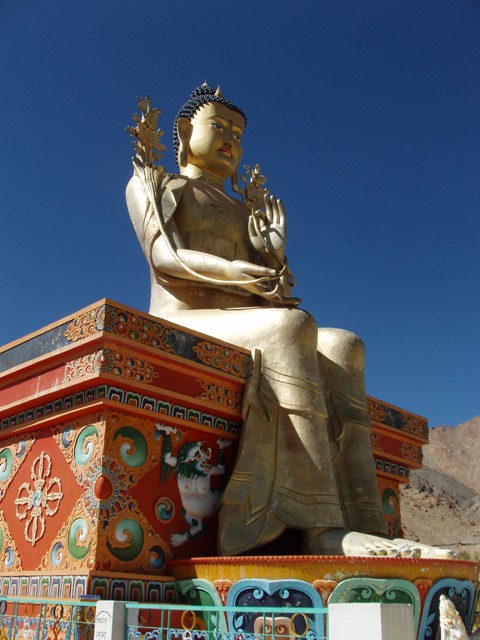
The Buddha is six stories high
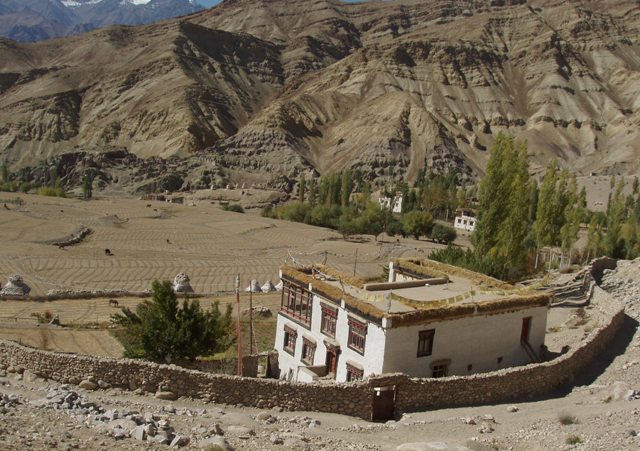
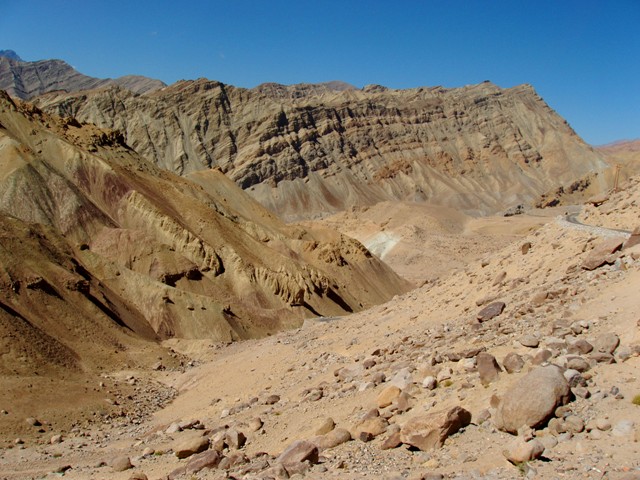
The short cut through the valleys
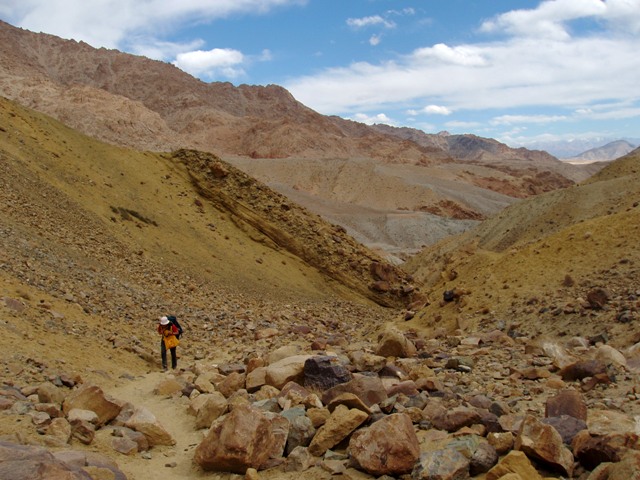
Ute coming up to the summit
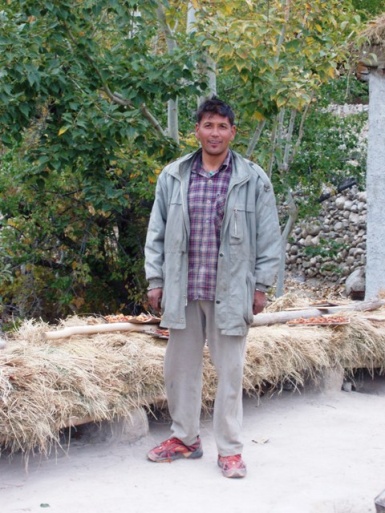
After some incredible scenery and a lot of doubts, we reach our first summit at about 4,200 meter or 13,650 feet!We reached the summit which is 4,200 meters (13,560 feet) and we could see the village of Yangthang. We were so happy that we finally made it to the first summit of our trek. This took a lot more time then we had planned, Ute was a bit tired and we were both hungry and needed a place to stay. The good thing was that Yangthang was downhill. We arrived in the village and stayed at the home of Tashi Zingopa. His wife, Dalher, made us a great meal. There is nothing better than a home-cooked meal after a long trek. Dalher did not speak much English but she tried to talk to us and used hand gestures. Somehow we understood each other and we all smiled and laughed together. After dinner we all sat around the kitchen. Ute helped cut apples for drying while Stobgess, Tashi’s father, took the pits out of the apricots while sipping on some “chand.” Chand is a local alcohol made from barley that tastes really, really bad. I sat with their three children and checked their homework. Their children are, Ragzin 16, Padma 14 and Narhoo 13. It was nice and felt like home.
This is the home of Yangdo. Ute, Yangdol and her cow. TashiThe Ladakhis are mainly farmers and over 90% live in the valleys where the water flows. They work most of the year preparing for winter, growing mainly vegetables, barley, apples, and apricots and tending to the cows, yaks and goats. They are so kind and generous; we have knocked on a few doors asking for a room to sleep or something to drink or eat; they have welcomed us like family members. Could you imagine, someone walking up to your door in Tucson with a backpack asking for a room and some food?
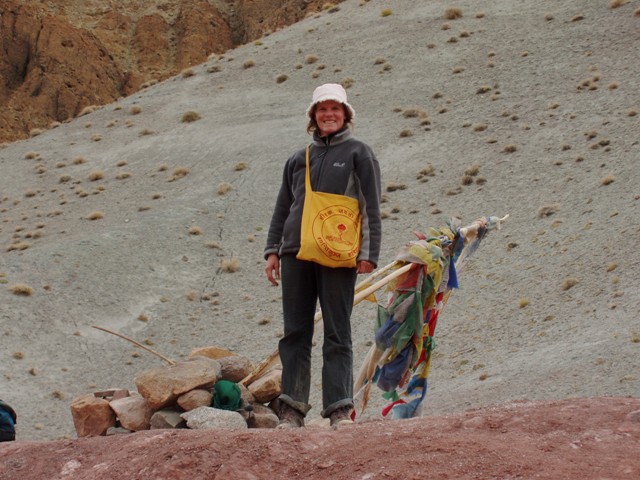
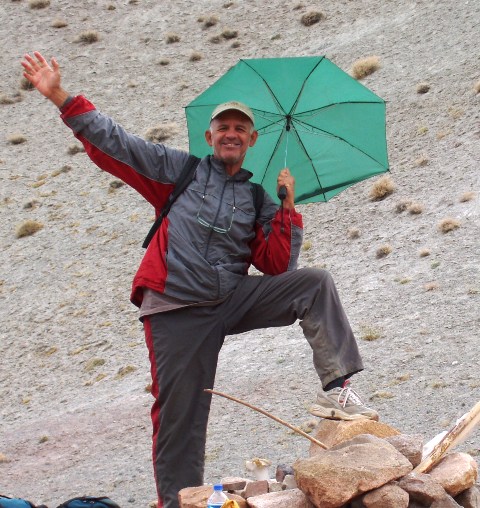
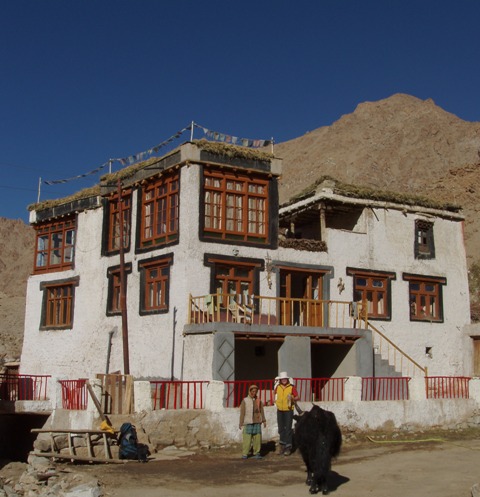
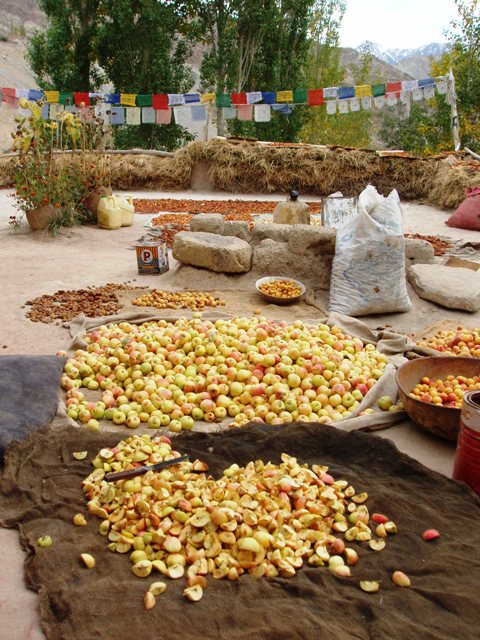
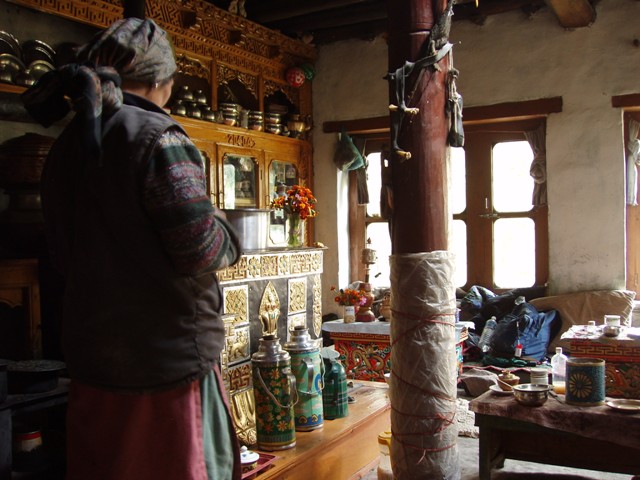
Drying apples and apricots on the roof and Dalher’s kitchen.
Since we did not cover as much ground as we had originally planned and Ute was on a tight schedule because she needed to get back to Leh, we decided to head back. She was organizing a theater performance for several groups of children near Dharamshala. So the following morning, Stobgess, Ute and I hiked up the canyon to the road and waited for the bus to Leh. Stobgess was also going to Leh and he had five cases of apples and apricots that he was taking to the market to sell. We loaded everything on the bus, got on and off we went on a very rough dirt road back to Leh.
We didn’t take guide books on that trek, just the hand written map that the lady from the tourist office gave to us. We actually guarded it like a treasure map and read it over and over every time we had doubts. And even though we only made it a third of the way on our major trek, it was wonderful and we were proud of our accomplishments. The trekking guides call this the Baby Trek but in our opinion, just the part that we completed was a bit tough. So great going, Ute, and thank you so much for your great company, long conversations and friendship! You and your husband are welcome to trek here in Tucson anytime; I promise I won’t talk so much.