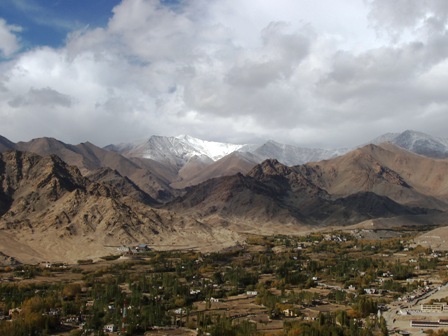
Jose's India Travel Newsletter
L A D A K H

 Introduction Delhi Leh/Ladakh Kashmir
Ladakh Section 2 Ladakh: Section 1 I Section 2Nubra Valley
A few days later, David, Lia and I went off to the Nubra Valley on a shared jeep. A shared jeep is different from the tourist jeep, these are more for the locals and there is a fixed cost per head, negotiable of course. To go the Nubra Valley you need a special permit because it is so close to the Line of Control, an area of Kashmir that is occupied by Pakistan.
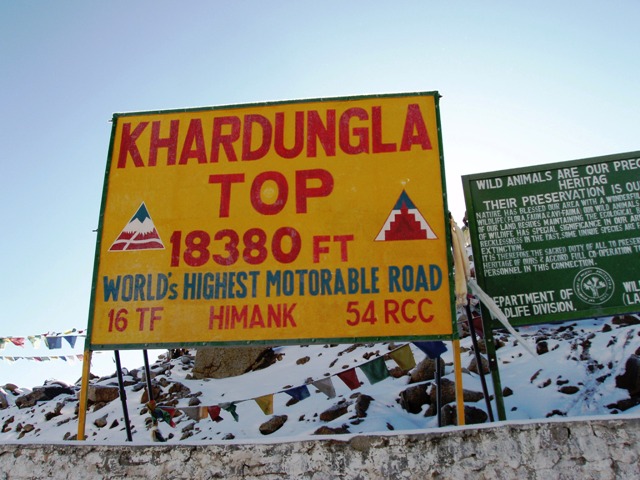
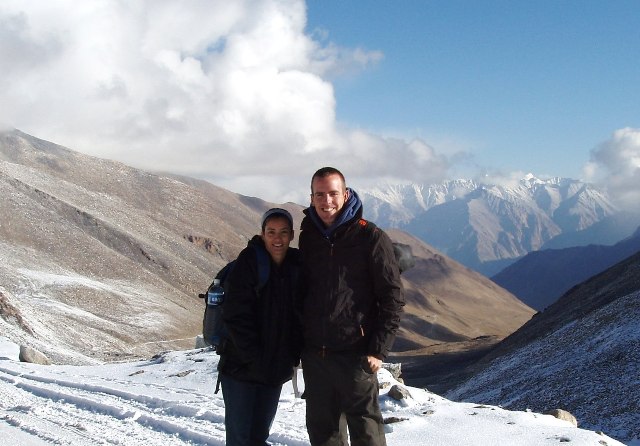
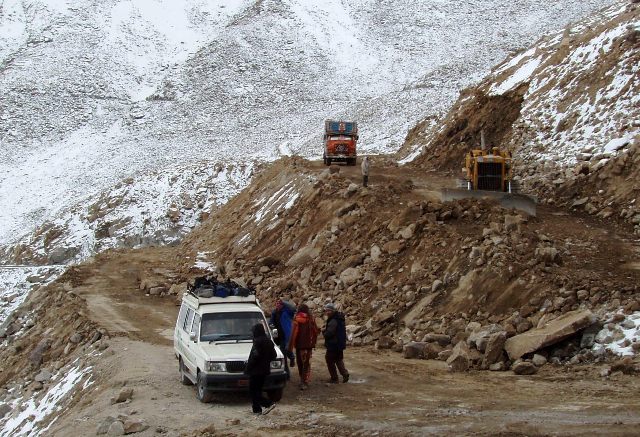
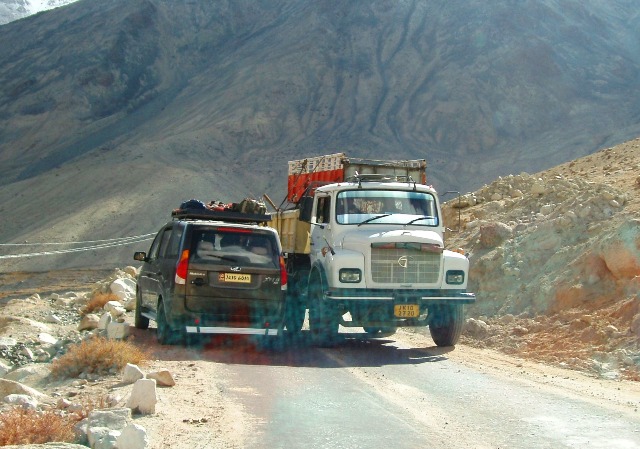
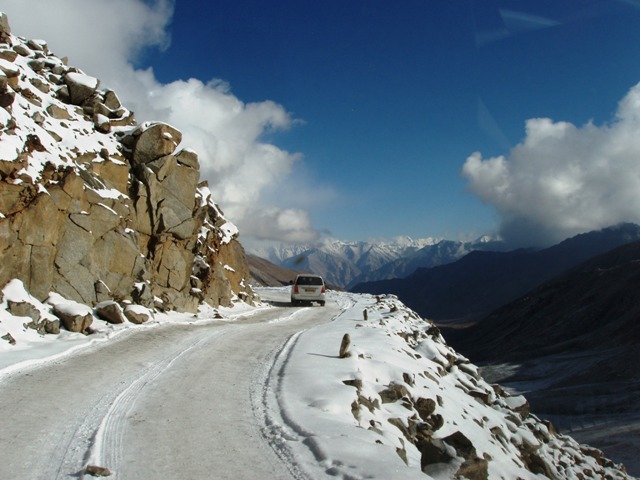
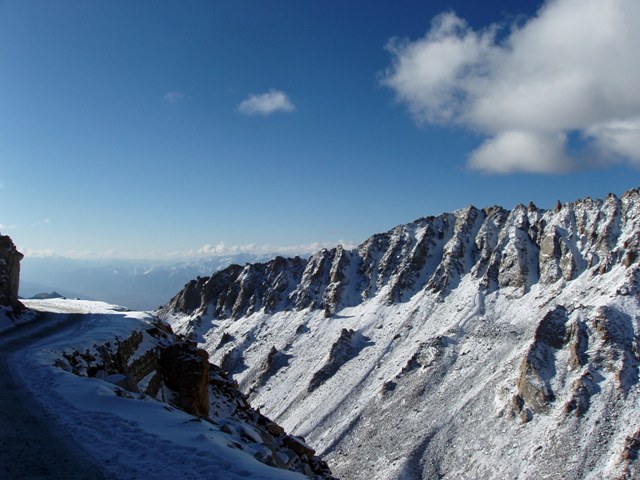
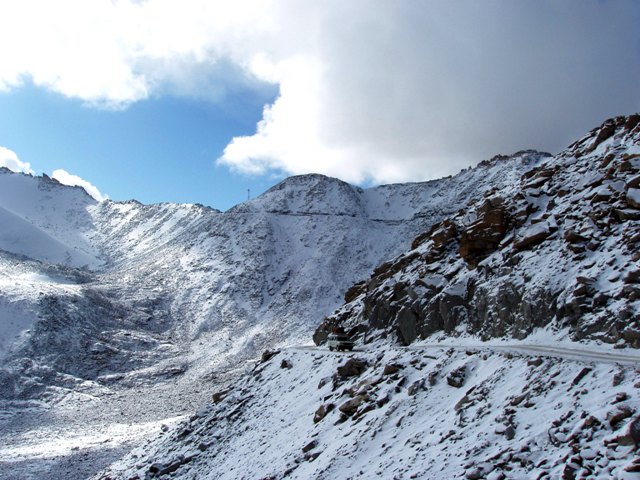
Wow, what an incredible place, first, the road went through the Khardung La pass, which is 18,380 feet high and when we were at the top of the pass, what a view. We were on top of the world watching hundreds of Himalayan mountain peaks in all directions. This is the highest motorable road in the world and the entire road from Leh to Disket is a one lane road. Traffic flows in both directions and somehow they make room for each other, sometimes it’s a tight squeeze. The road is not completely paved and they are always working on it because there are so many potholes and rock slides. Most all the road workers are from Nepal and many of them are women.
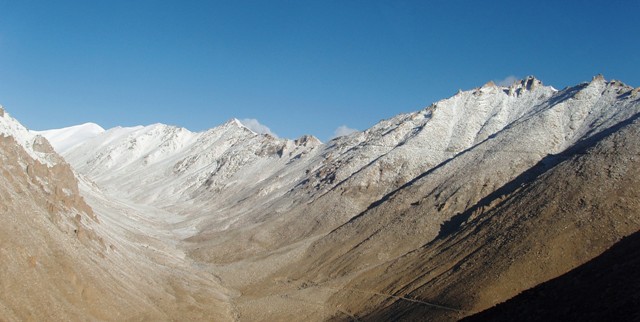
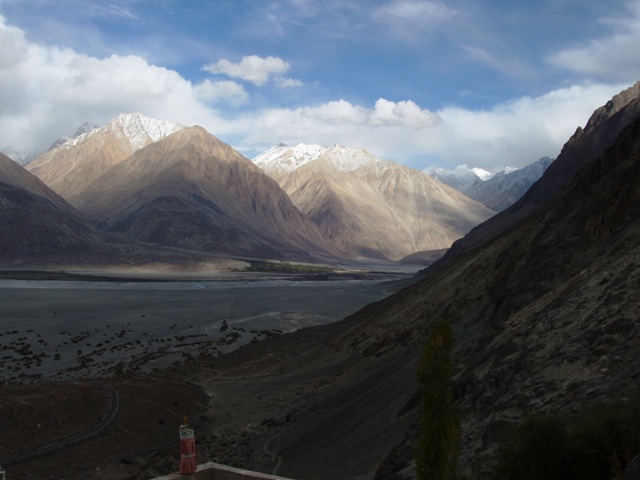
Once over the top, you can see the vastness of the Nubra valley. We were headed to Disket, a village in the valley. I did not know what the valley had to offer other than everyone said it was beautiful. I had left the guide book behind, but David and Lia had the latest Lonely Planet and the Rough Guide, they were well armed; time to explore, guide book or not.
On top of the world. David is from England and Lia is Israeli but living in the US
A stop to allow the bulldozer to clear the road. It’s best not to worry about close calls, we are right behind them.
Some of the cliffs are only a 300 meter, 1000 feet, drop or more.
At 5,655 meters (18,380 feet) you feel like you’re on top of the world.
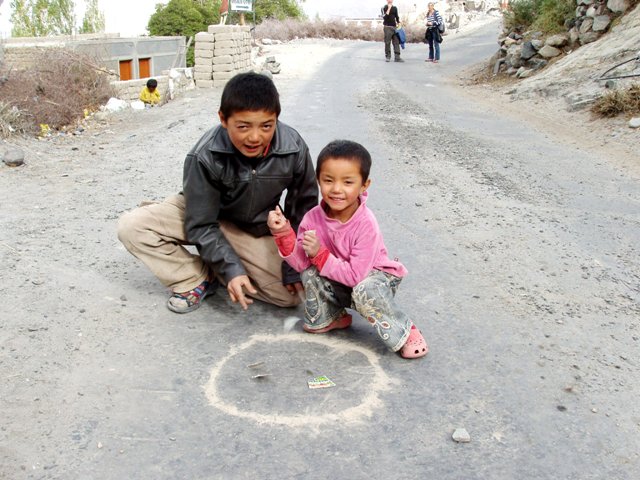
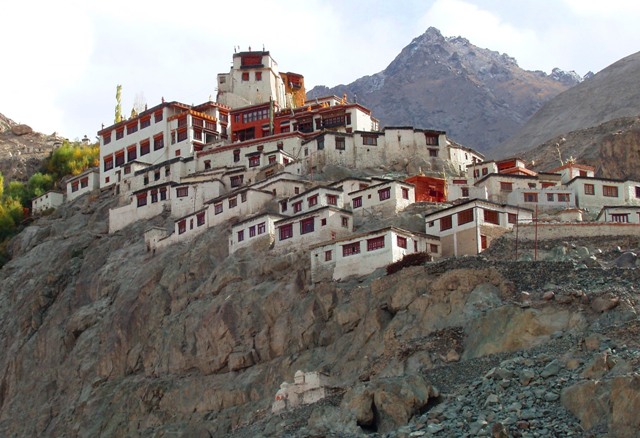
We arrived mid morning and got rooms at the Zambala Guest House in Disket. This is a nice place and David said it was the best room he has had so far in India. We decided to go to the Disket monastery in the afternoon and then go to Hunder, a village about 12 kilometers away on the following day. The weather was great and the walk to the monastery was amazing. Along the way, we met some kids playing a game. The object is to knock the match box tops out of the circle by throwing a rock at them, the little girl beat me…I need more practice.
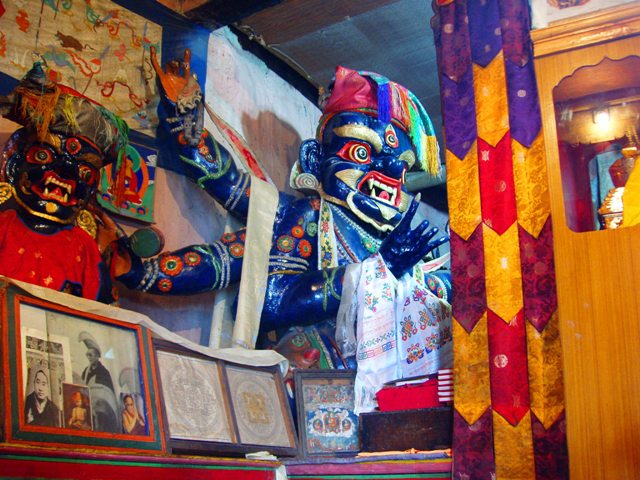
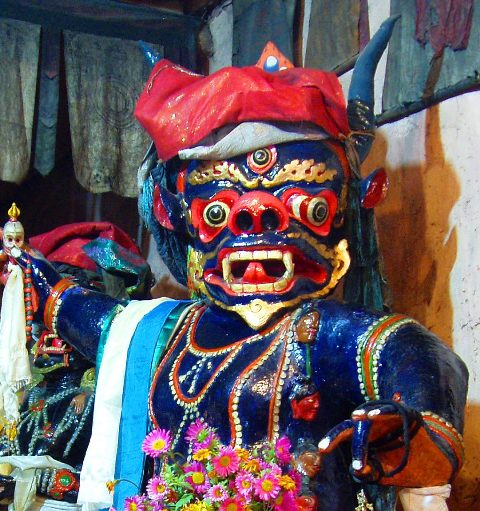
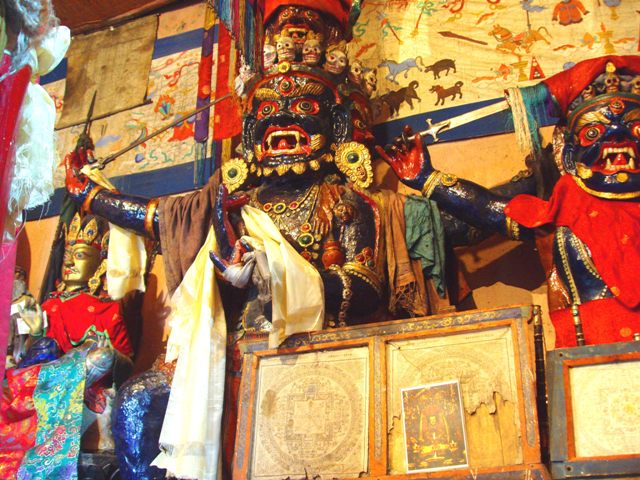
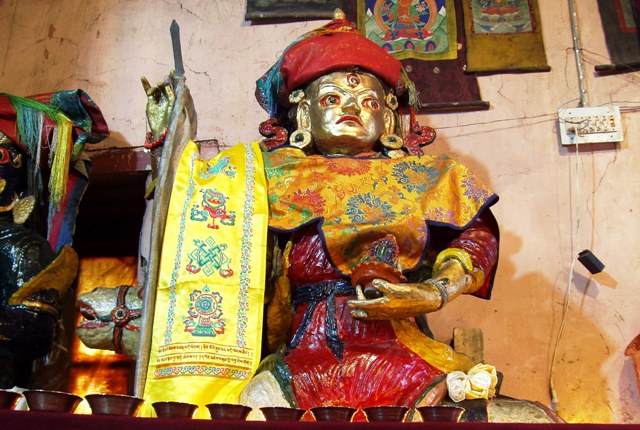
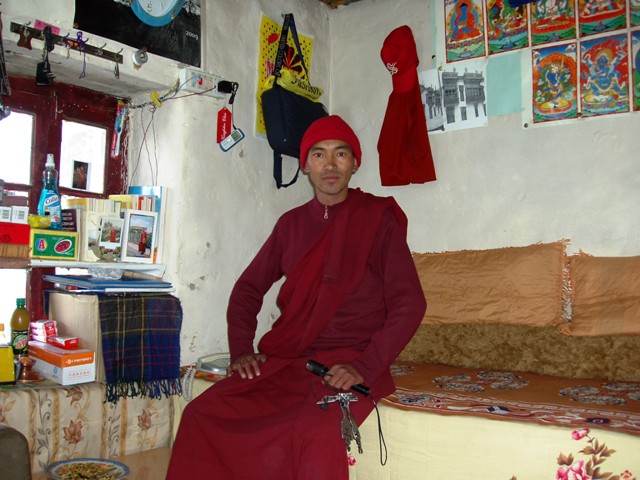
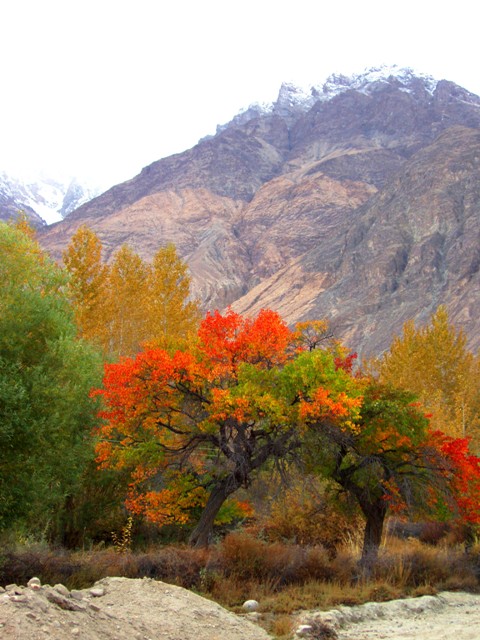
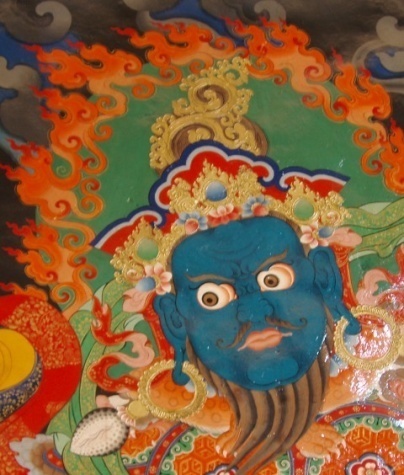
A local game the kids were playing in the middle of the road Incredible valley and montains of the Nubra ValleyAt the monastery, we met Tsering Angchock, who is one of the monks. We asked him a few question about the monastery and especially about the room with all the protectors of the Buddha. He told us that every monastery has a room for the protectors and these protectors are meant to protect the Buddha. Normally, their faces are veiled throughout the year but because of the festival that was starting in a few days the monks uncovered their faces. He invited us to his room for tea and we had a very nice conversation. His room is small and simple but he had everything one needs to live comfortably. He made us some tea on a small propane gas stove and it was really good. We were surprised that he had an old computer, but no internet. In most of these remote areas there is electricity only for a few hours a day…usually from 7:00pm to 11:00pm. During the winter, the monks only heat their small rooms but not the rest of the monastery. These monks are tough, they don’t wear very much clothing and they walk around with sandals and no socks. When the sun goes down, it gets really cold and it’s just October…but come winter, it’ll go down to -30c. In my room, I slept with four blankets, three or four layers of clothes, wool scarf and my yak hat--and did I mention that the rooms are not heated?
Mahakal, a proctector from evil spirits Damarachak, another proctector
Darma Raja Another protector from evil
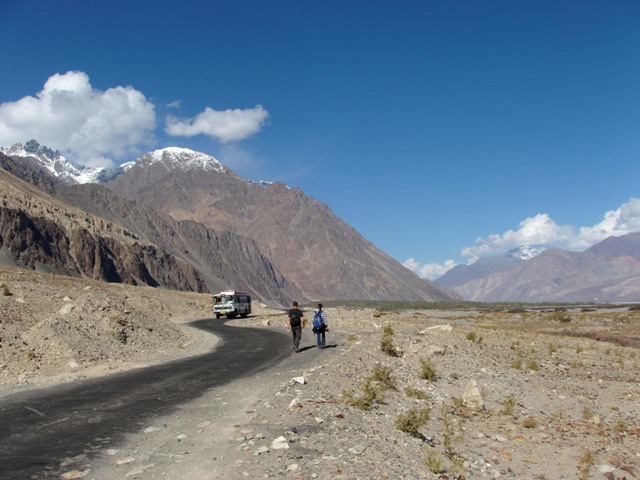
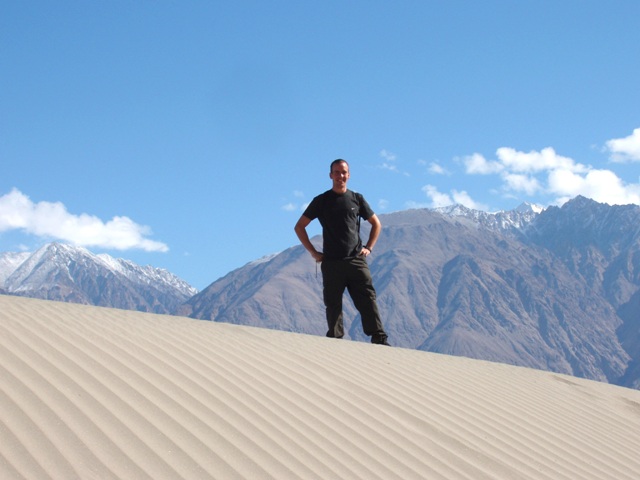
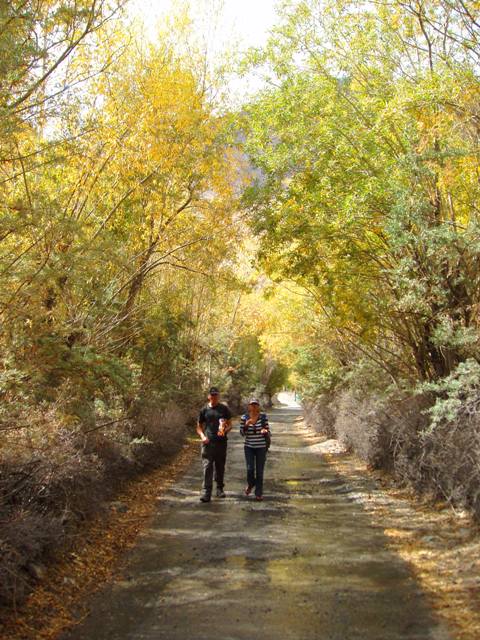
The Disket Monastery Monk Tsering Angchock in his room.The following morning, after breakfast, we were off to catch the bus to Hunder. This is a tiny little village and I don’t know how in the world we could have been an hour and a half early, I guess we just got the time mixed up. So we decided to walk to Hunder and take the bus back. It was another beautiful day and the walk to Hunder so incredible. There are some sand dunes along the way and apparently you can get a camel ride but I guess the season was over and the camels have been shipped to Rajasthan for the tourist, its high season there. We continued walking all the way to a bridge that is past Hunder and where foreigners are not allowed past that point. This area is heavily fortified by the army because the area of Kashmir that is occupied by Pakistan is 18 kilometers away. The village was closed for the season so we could not even find a cup of tea…but it was a nice walk. After walking about 15 or 16 kilometers, we were getting hungry and no tea. By this point we were talking about hitching a ride back and how cool it would sound if we could say that we hitched through the Himalayas. But as soon as we got back on the road, the bus back to Disket was coming our way…we’ll hitchhike next time!
Walk to Hunder
David on the sand dunes
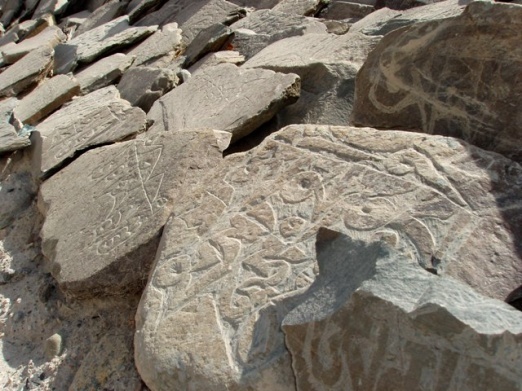
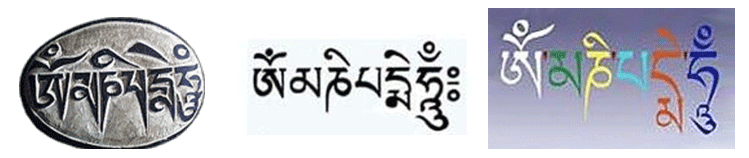
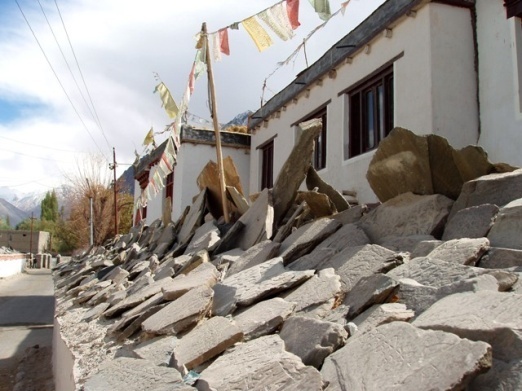
Walk through Hunder VillageBack in Disket we went by one of the many Om Ma Ni Pad Me Hum walls in the village. There are thousands of these walls all over Ladakh and these words Om Ma Ni Pad Me Hum are carved in Tibetan script in each stone. The walls are made by stacking these carved stones on top of each other about two meters high, from two to three meters wide and I have seen a walls over 1 kilometer long...now this is lifetime employment.
This is a Om Ma ni Pad me Hum wall and these words are carved in Tibetan script in each stone.
Om Ma ni Pad me Hum cannot really be translated into a simple phrase or even a few sentences.
It is said that all the teachings of the Buddha are contained in these six syllable mantra (prayer): Om Ma ni Pad me Hum .
Tibetan ( Ladakhi ) Buddhists believe that saying the mantra (prayer), Om Ma ni Pad me Hum, out loud or silently to oneself, invokes the powerful benevolent attention and blessings of Chenrezig, the embodiment of compassion…repeated enough times in deep meditation leads to the path of enlightenment. Viewing the written form of the mantra is said to have the same effect. Spinning the written form of the mantra around in a Mani wheel (or prayer wheel) is also believed to give the same benefit as saying the mantra.
In visualization practice we imagine ourselves to be a Buddha, in this case the Buddha of Compassion, Chenrezig. By replacing the thought of yourself as you with the thought of yourself as Chenrezig, you gradually reduce and eventually remove the fixation on your personal self, which expands your loving kindness and compassion, toward yourself and toward others, and your intelligence and wisdom becomes enhanced, allowing you to see clearly what someone really needs and to communicate with them clearly and accurately. This is a start to understanding these six syllables. For more info on you can go to this web site: www.dharma-haven.org/tibetan/meaning-of-om-mani-padme-hung.htm
The following day we are off to Leh in a shared jeep with some young French folks. The rides seem very long and tiring but once back we went to lunch at Gismos, also known as the German Bakery. I don’t know why they call it the German Bakery; they have some nice baked sweets and cakes in there but there is nothing German about it. But they make very good momos, a Tibetan style stuff dumpling. David owed me a few momos because he had lost several bets when we were back in Disket; and we bet momos. It was time for him to pay up. But when we sat down and ordered, they were all out of momos. But David, you are not off the hook, next time we meet, you still own me some momos and I am going to really enjoy them. I then headed out to Thiksey to stay at the monastery and David and Lia went off to rent motor cycles and go around the valley.
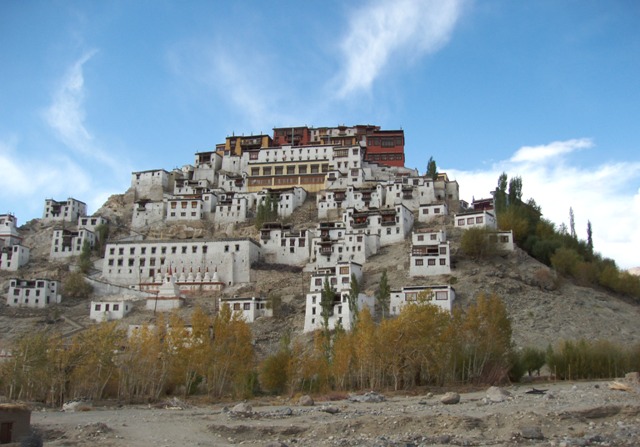
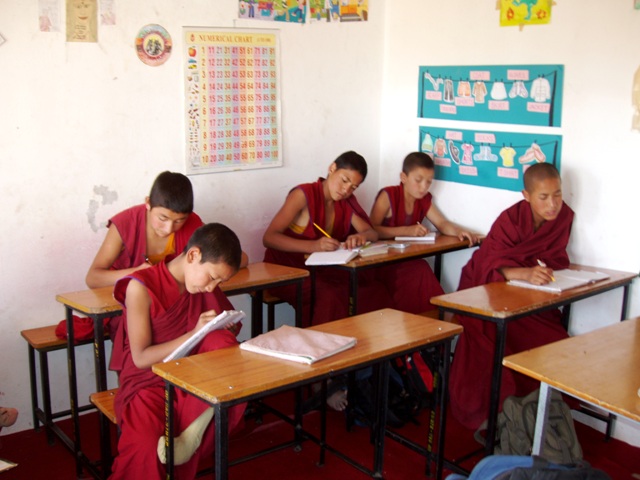
Thiksey MonasteryI took the bus to Thiksey and by this time I knew exactly where to get it, the schedule and where to get off. When I got off the bus, I hiked up to the monastery and I got a very nice room. By coincidence, I ran into Denis; I met him in Leh the previous week and he was doing a documentary. In his documentary, he would ask people a series of same questions regarding their experiences in India and record their responses. He interviewed me at the café in the monastery. Then Hanna, whom I met earlier at the monastery, joined us. She is from Switzerland and has been teaching English for the past five months to the boy monks at the monastery.
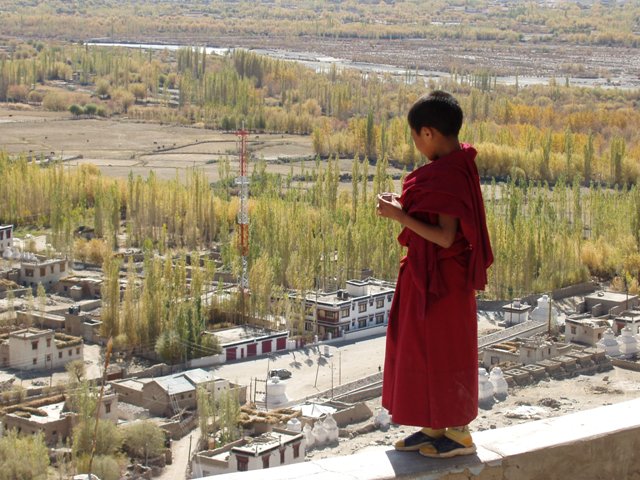
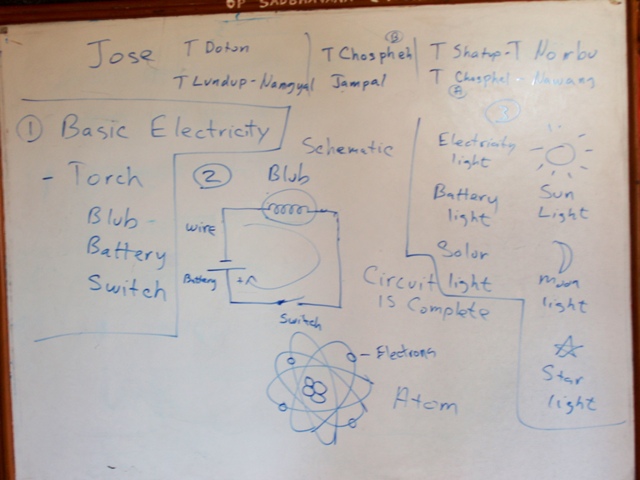
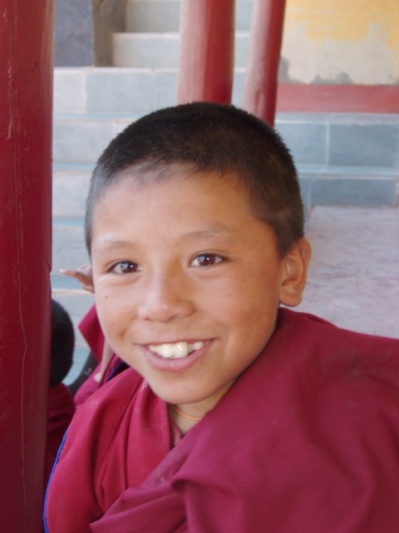
Thiksey Gompa Tenzin Chospheh, one of the boy monksThat night I went to work on a lesson plan but I asked myself, where do I start, what level are they at, and it needs to be something that they can use. I decided to teach basic electricity, atoms and light. It needed to be practical I thought to myself. We could take apart a flashlight, then discuss how each component functioned, draw an electrical schematic of the circuit, that’s a start.
After Denis left, Hanna and I had quite a long conversation about how she got here and how she got the teaching job. I told her that it would be great to teach. She asked me if I could teach science because she couldn’t and the boy monks really needed it. I mentioned that I had a technical background and right away she asked me if I would consider teaching the boy monks. I said yes immediately. Wow, this was great and what an opportunity and it just fell in my lap!
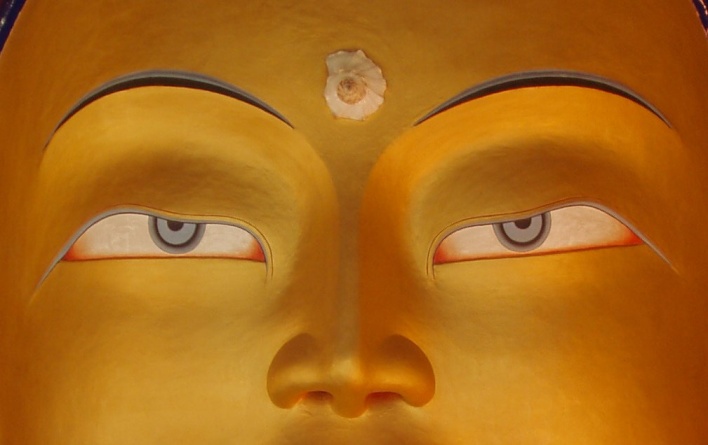
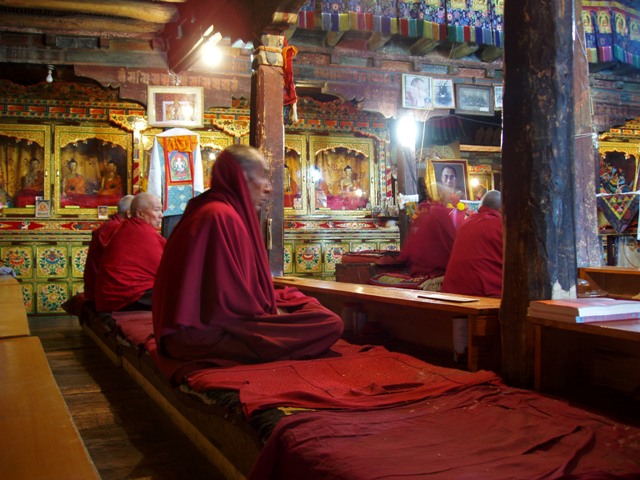
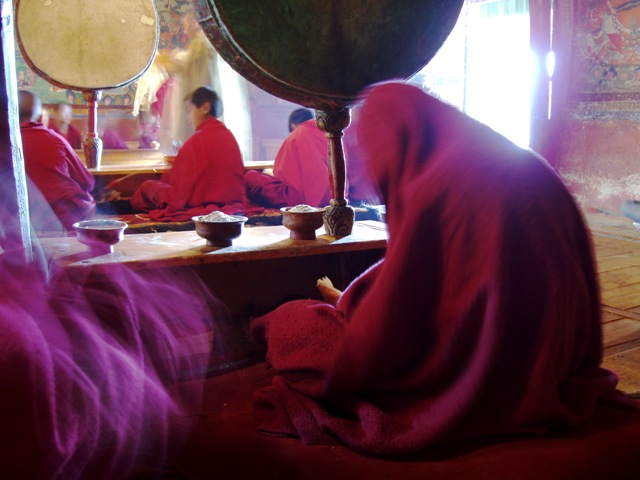
Face of the Miatreya “ Future” Buddha, actual statue is two stories highThe following day we started with the morning puja, “prayer” and meditation in the main and most important part of the monastery, the prayer hall. One good thing, at this monastery, puja starts at 7:00am. At the puja, the boy monks go about their duties of serving yak butter tea, and barley cereal; first to the older monks and then to everyone else. The butter tea is salty takes some time to get used to it. This ritual has been practiced for centuries and is very spiritual. It is a great way to meditate and start off the day. I would often pray the “Our Father”.
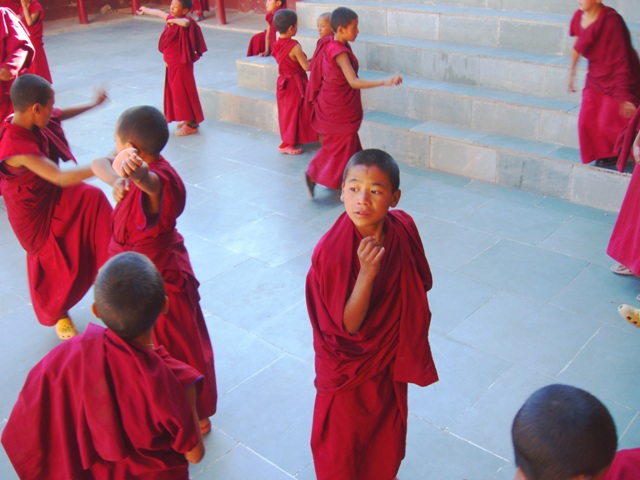
The older monks at puja, morning prayer The boy monks can’t stay still but it’s just fine
Monks in the classroom First lesson on basic electricity
Practicing for the Chams festival in November
I want to thank Hanna for giving me the
opportunity to teach these boy monks;
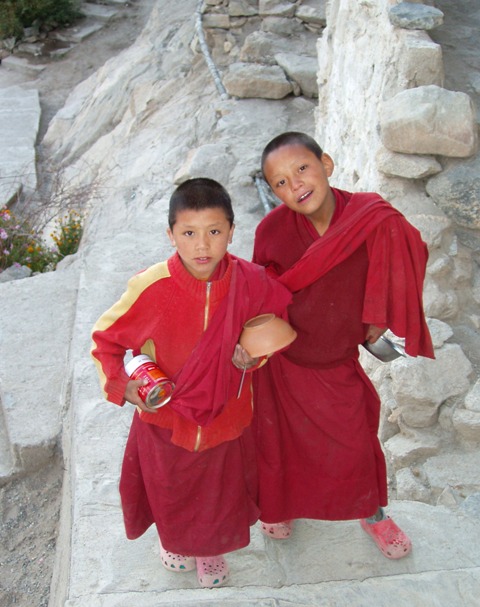
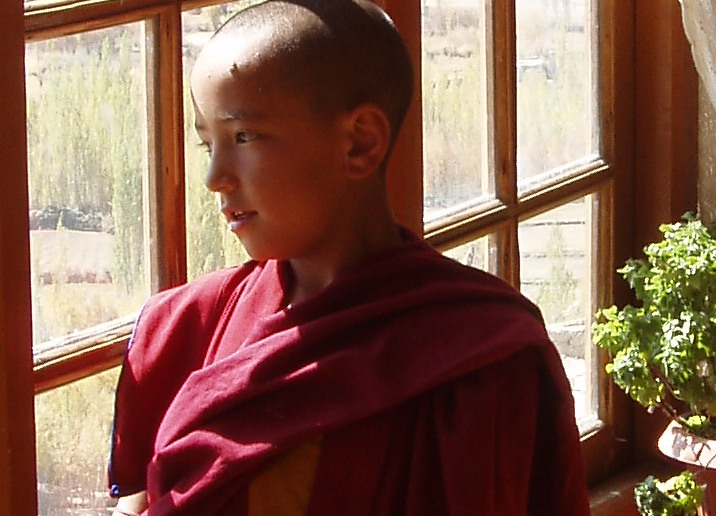
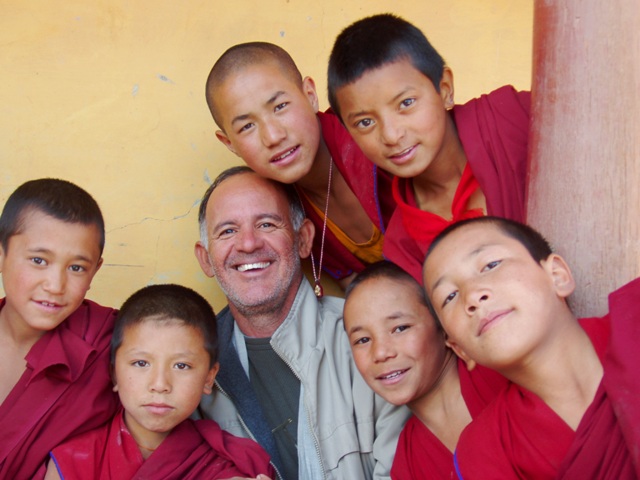
truly a gift, thank you my friend.These boy monks are resilient, savvy and very much like everyday kids. They have a great sense of balance because they climb and run along narrow and very high walls all over the monastery and they don’t fall off. Most of boy monks here come from Zanskar. Zanskar is south of Ladakh and is extremely remote but very beautiful. The only way into Zanskar is by road and the roads close in September for the winter; you’re stuck for the duration if you don’t get out in time. A few of the boys choose to come here but most are dropped off at the monastery for the monks to care for and eventually they become monks. Each boy lives with a monk. These older monks, usually in their late twenties early thirties, become their parents, teachers, and mentors. When these boy monks graduate and become monks themselves; usually in their late twenties, they become a mentor for another boy that is just starting and the cycle continues again.
My experience here was incredible. The boys were like sponges, eager to learn and some are very bright…I also learned a lot from them. Their culture and way of life has not changed much, if any, for centuries. Our western approach to education is not always in harmony with their culture; I really had to be conscious of this and careful in my teachings.
The following film depicts the way of life of many of these boy monks before coming to the monastery. It is a beautiful film shot my friend Artur Abagyan from Russia. The YouTube quality is not like the original but it is still worth watching. Also, if your internet connection is slow, allow the film to play once and then press replay. This will allow you to view the film uninterrupted.
I left the Thiksey Monastery one evening and I was waiting for the bus back to Leh. I remember feeling kind of warm and fuzzy and really good inside; I had done something good and then it hit me, new winter bus schedule, I had missed the bus. Well it’s about 18 kilometers to Leh; I thought about just walking back or that this was the perfect opportunity to hitch a ride. After an hour or so of walking a small car that looked like a taxi stopped and picked me up…well there went the hitch. It was a ratty little car; it would barely make it up hill and I had to hold on to the handle above the door because the seat was broken and it went all the way back. There was another lady in the back seat with an infant. I had some sweet bread from the monastery and we all had some and laughed all the way back to Leh even though we used mostly hand gestures to communicate. The driver seemed Muslim and I did not know what to make of it, most of the foreigners I had met had a very negative image of the Muslims in Ladakh. Anyhow, he dropped me off at the old bus station and I as I pull out some money he just smiled and moved his hand back and forth to indicate no money. I smiled and said thank you. As soon as they left; I threw my fist in the air and yell, “A legit hitch in the Himalayas”. The next day I told David and Lia about the legit hitchhike and would you believe it, they wanted proof.
Alchi and Lamayuru Monasteries
One of my last outings around Ladakh I wanted to visit to the monasteries of Alchi and Lamayuru. I heard so much about them and how stunning they were. These are some of the oldest monasteries in Ladakh dating back to the 10th century.
I have to admit that a strange thing happened to me that day. This is a bit personal and shameful but what the heck here it goes anyway.
I went to the bus station to get the bus to Alchi. At this point, I have the bus schedules down and can go to just about any village in Ladakh. The bus costs 50 rupees and it leaves at 8:00am and returns at 2:00pm. I needed to return that evening because I was planning to go to Kashmir with Hanna and her boyfriend, Shabir the following day. However, if I went to Alchi on the bus I would not have time to make it to Lamayuru because Lamayuru is three hours away from Alchi. But by that time, Ladakh was starting to get too cold so it was time to head for warmer climate and Kashmir was warmer. We also needed to leave Ladakh because in a few weeks the roads in and out would be closed.
At the bus stop, one of the local taxi drivers approached me and asked me the usual questions in broken English, “what country, how long been Ladakh, what name you, and finally, where want to go.” I answered his questions and he said, “I can take you to Alchi and Lamayuru and we can be back to Leh tonight, for 1000 rupees”.
This was quite a bit of money and more than I wanted to spend but I really wanted to see Lamayuru. I could have gone a week ago but I just procrastinated doing nothing really and now it was too late to try to find someone to share the taxi and split the cost; most people had left Ladakh and I was one of the few foreigners left. So we agreed on 950 rupees, during the high season this same trip cost 2,800 rupees.
We left in a tiny minivan, which can hold about seven people, but it was just me and the driver; it felt like such a waste. On the way, the driver, Nawang, asked me if I had my passport, “yes”, I said. About an hour out, he diverted from the main road and took this strange pass going into a narrow valley. This didn’t feel good and I quickly asked him where he was going. I have been on the main road to Alchi many times and this was not the right way. He said that there was a rock blocking the main road. I didn’t buy that, how could he possibly even know that information; he didn’t even have a cell phone. I told him, “I just saw a bus go by”, “Short cut”, he said. Right then, my mind went into overdrive and I started thinking the worst. What if he is driving me straight into an ambush, he knows I have my passport; he could be with one of those militant groups I heard about. I could just see in my mind, him stopping and a group of these militants with their Afghani-made uzis surrounding the car and I would be history. I thought, well he’s small, tiny really, I could get him in headlock and at the very least, we’d go down together.
As it turned out, it was a shortcut through some very beautiful scenery, awesome really. It took us through the back part of the village of Nimo; this saved us about half an hour. We stopped for breakfast and I felt bad, so I paid for his breakfast, chickpeas curry. It was delicious and I wanted the recipe. But I could not get anyone who understood the word, “recipe”. And when I asked them how they made the curry, they would just say, “Mister, the curry is already made”.
Back on the road again, I felt bad about my thoughts so I decide to write down this thought in my little notebook and not to judge it, right or wrong. I told myself to just be aware of it. So I wrote, “Getting Kidnapped”.
Along the way, I kept thinking about the money, but in retrospect, it’s only $20USD, I don’t know why I was fussing over it.
We passed a person who was waving us down and we did not stop. I felt bad for not stopping and I thought to myself, we have all this room in the tiny minivan and I had already paid for the entire trip to and from Leh, I should have picked her up. At Saspol, I saw another lady who was signaling us down, this time I told the driver to pick up her up. Maybe that will make up for my previous thoughts and for not stopping for the other person we passed up. But then another thought came to mind, “I can charge her”. Oh man Jose, I said to myself, here you are trying to do a good thing and now you want to charge this lady who is just going to the next village. I took out my little notebook and wrote down that thought, “Charge the lady”.
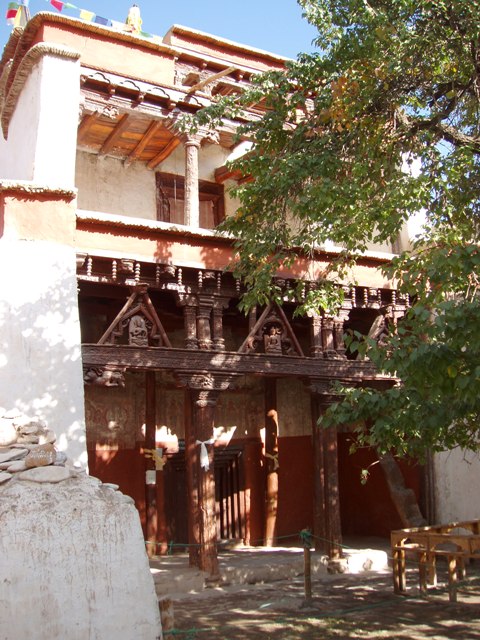
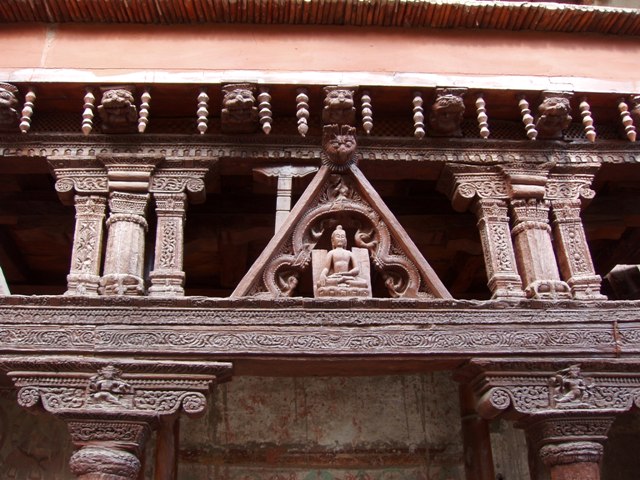
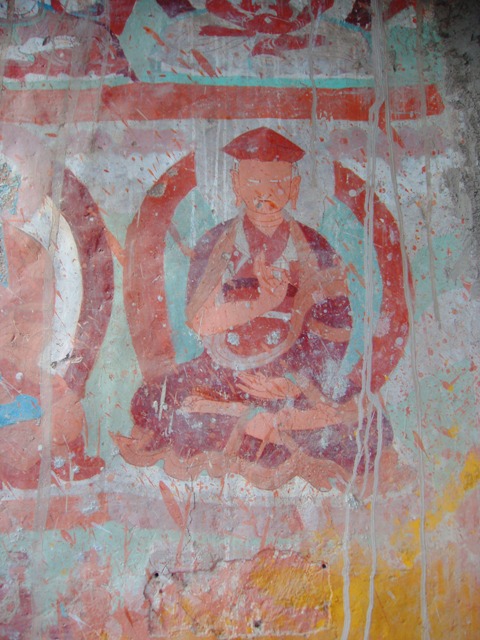
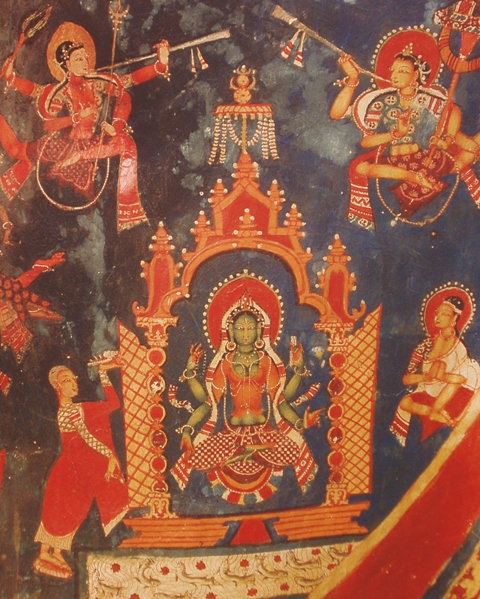
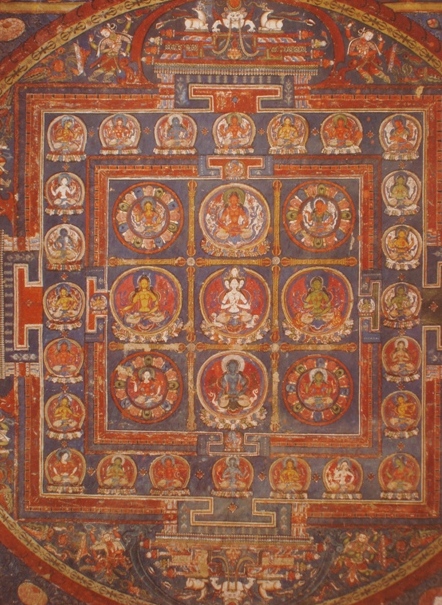
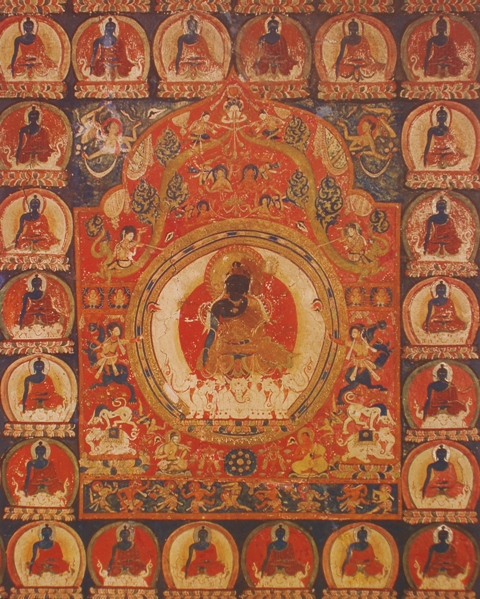
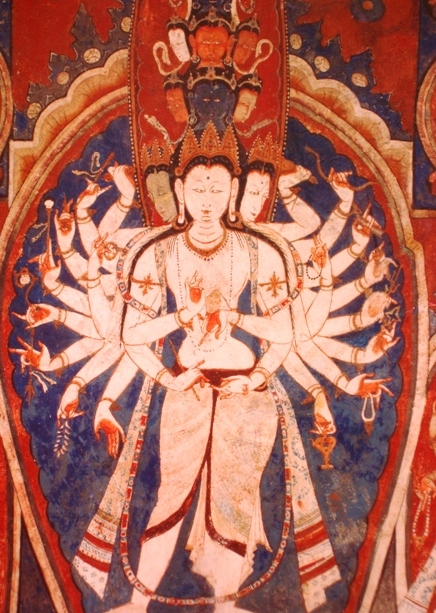
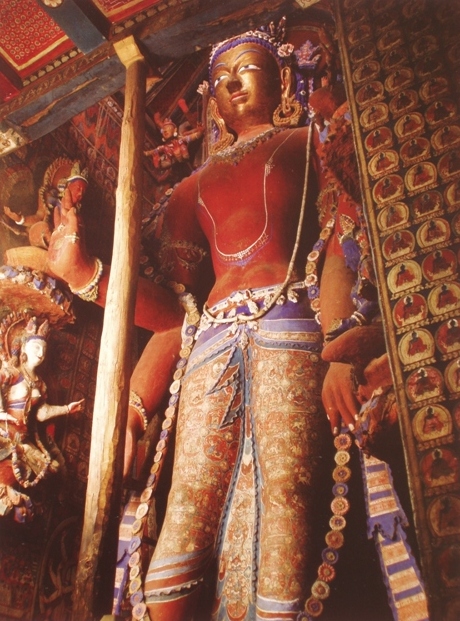
We got to Alchi, and went straight to the monastery. I had heard the monastery at Alchi houses many works of arts that the Buddhists regard as sacred and are well preserved. These paintings and statues represent aspects of enlightenment. In the words of the Dalai Lama when speaking about Alchi, “Our vast artistic and architectural heritage testifies to the importance given to the arts in our way of life, which in turn serves to convey our values to the rest of humanity”.
From the outside, there is nothing special about the monastery, it is not majestically clinging off some high cliff, and in fact, it is small, tiny when compared to most others. But once inside, the paintings and statues take your breath away. It was so inspiriting that I didn’t say anything for an hour or so. Then I wanted to take some pictures and the monk said no; another thought popped into my head, maybe I can just give him 100 or 200 rupees. I thought to myself, Boy oh boy, Jose, what are you trying to do, “Bribe a Monk”. Well I wrote that down in my notebook. Pretty soon I’m going to hell. Anyhow, when the monk went away, I did manage to take some pictures, no bribe.
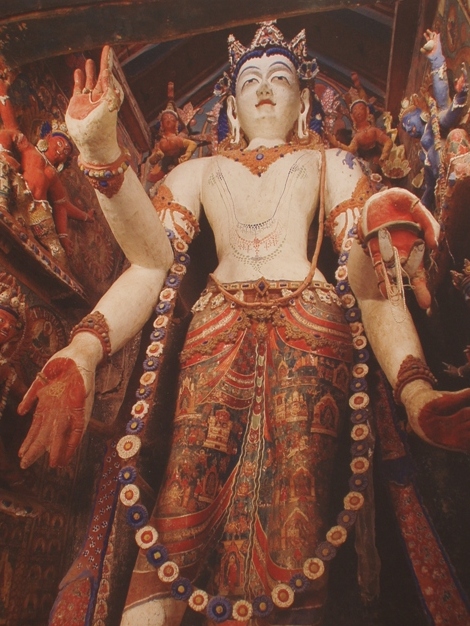
Maitreya “Future” Buddha, 5.1 meter high, 17 feet Avalokiteshvara, the god of compassion
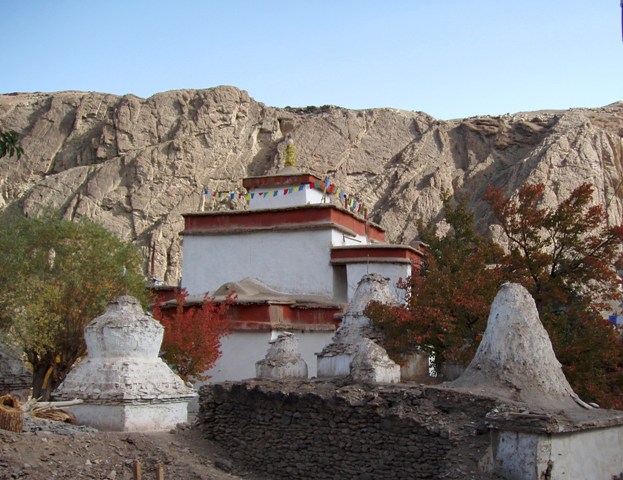
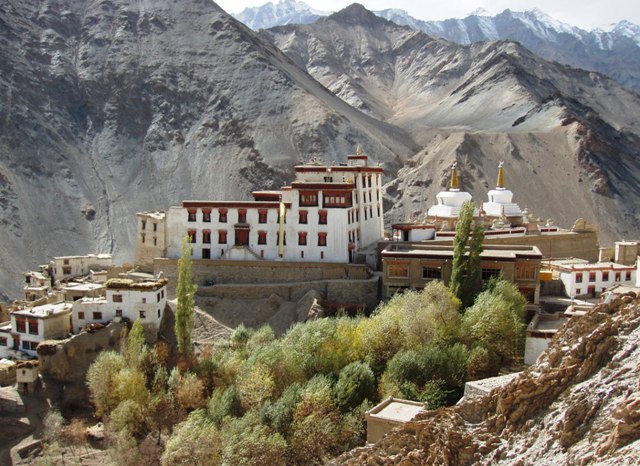
On the way to Lamayuru, I remember thinking how bouncy the road was but as we turned round the bend, there it was, hanging off the cliff, the famous Lamayuru Monastery. This is also a 10th century monastery and there is a cave in the monastery where an enlightened monk meditated from 1016AD to 1076AD. I don’t remember his name but that is a long time to be in a cave. Then another thought came to mind. This one is bad: I could just stay and hide at Lamayuru until tomorrow and not have to pay the driver; he would get tired and go. Well, I just wrote it down, “Stay and Hide at Lamayuru”.
Coming back to the minivan, a monk from the monastery asked me for a ride to Khalsi which is on the way back to Leh. We talked along the way and dropped him off. We then picked up a Sikh going to Leh…well at least two good deeds. At first, the Sikh thought I was Ladakhi even after I said Julay to him. Anyhow, on the way he talked to me about the Sikh religion, Guru Nanik and the other nine gurus. We even stopped at a Sikh Temple near Leh.
I don’t know what was on my mind that day. That evening I ran into Hanna and I told her about these thoughts. She laughed so hard, I thought she was going to burst open. I did not expect that reaction from her because I thought it was a bit shameful, but we laughed together and I felt much better. She said I should write a book and call it, “Stay and Hide at Lamayuru”. Then she just said, we all have thoughts like that. I told her about how I wrote my thoughts down and decided not to judge them. In a way, maybe by just writing them down and of simply becoming aware of these thoughts; or maybe by being a bit more compassionate with myself, I have freed myself from them. I didn’t really know but I haven’t had many these kinds of thoughts lately…but I will have my little notebook ready, just in case.
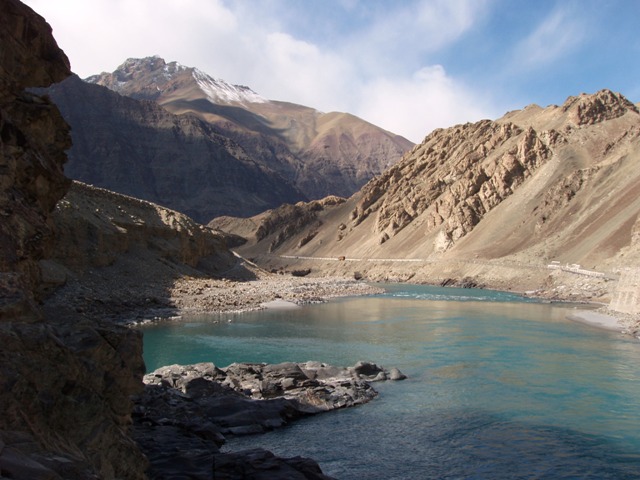
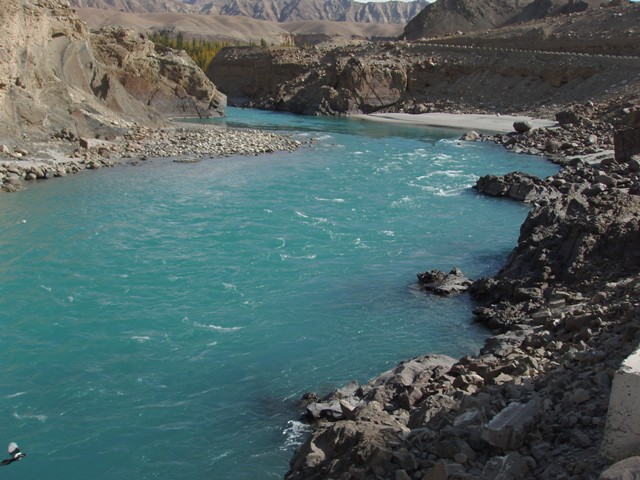
Indus Valley Turquoise color of the water where the Indus and Zanskar Rivers meet
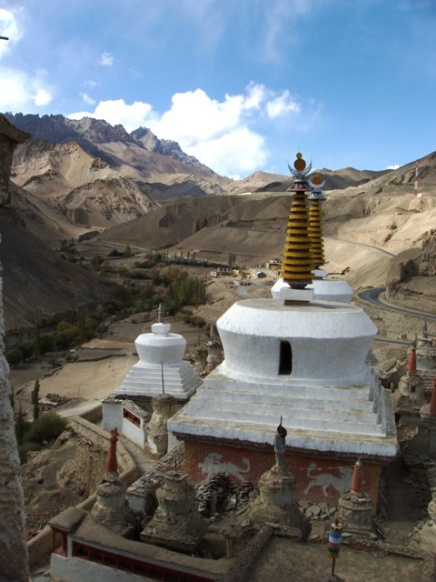
10th century Lamayuru Monastery Stupas at Lamayuru
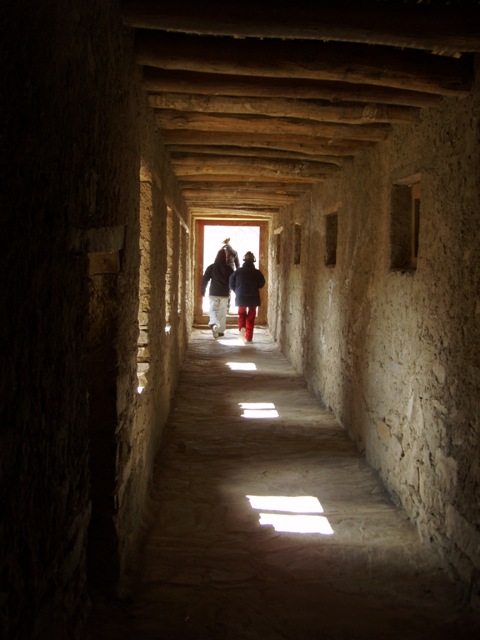
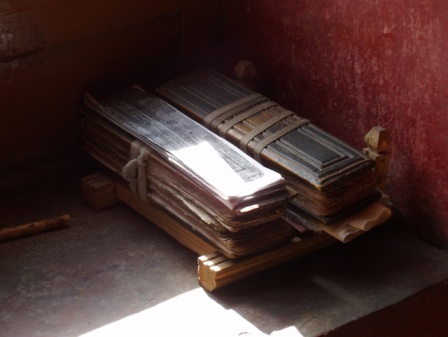
There are many pasageways in the Monastery Monk Prayer Books