Jose's India Travel Newsletter
K A S H M I R

 Introduction Delhi Leh/Ladakh Kashmir
Kashmir Section 2 Kashmir: Section 1 I Section 2 I Section 3 I Section 4 I Section 5
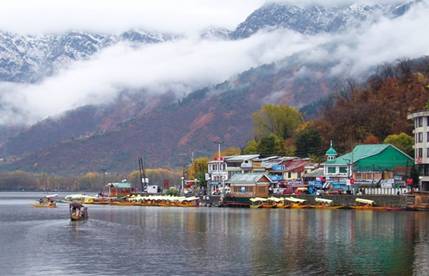
The Village of Dal Lake
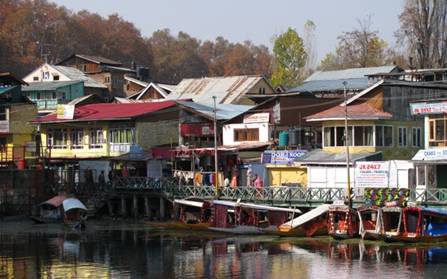
Shabir and his family, mom, dad, and eight siblings, live in an old cozy house in the village and they share their small island with four other families. It is one of the larger islands measuring about 40 by 80 meters with a canal running through it. Over the past century or so, the people of Dal Lake have brought dirt in from the mountains and have built many small islands in the middle of the lake. Many of the islands are just large enough to put a house on it…bringing in the dirt is extremely expensive. Many own other small islands near their homes for farming, tending to their animal or for making handicrafts. Over the years these small islands have become a village there are also several large markets built on stilts over the water. Many of the people have been here for generations. The lake is fairly large but it is getting smaller. In 1980 the water surface area was 25 square kilometers; now it’s 12.5 square kilometers. This loss is due to the growth of the village and because of this; the government has stopped any more construction on the lake.
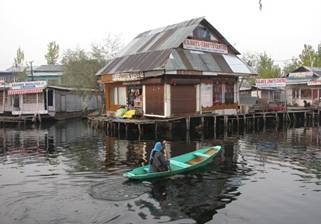
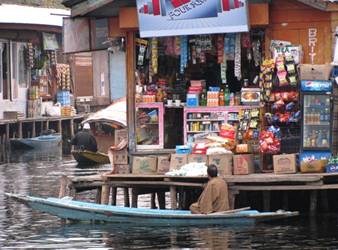
One of the main intersection in the village market Bashir’s corner store, he makes a great chai early n the morningDal Lake is not the most beautiful lake I have ever seen but the people have created a truly unique village. It is unlike anything I had ever seen. It has a look similar to the Bayous of Louisiana and to get around you need boats like in Venice. It is almost a self-sustaining eco system where they plant and grow most of their vegetables, harvest the lotus and other plants from the lake. They tend to their farm animals make butter, yogurt, sell fresh milk. There are many shops in three main markets where they sell many of their Kashmiri handicrafts to the tourist that comes by in the Shikara. As I mentioned, there are around 1,400 house boats left behind from the British days that the Kashmiris rent to the tourist. Some of these house boats are luxurious; a few are two stories high. The villagers trade many things among themselves and live a laid-back and peaceful life. The uniqueness of this environment is what gives Dal Lake its charm and beauty. The lake is not polluted; it is crystal clear down to the bottom. When I dropped my brand new camera into the lake I could see it at the bottom look up at me.

Bashir wanted me to take his picture Bashir taking one of me, then I dropped my new camera in the lake, “oops”
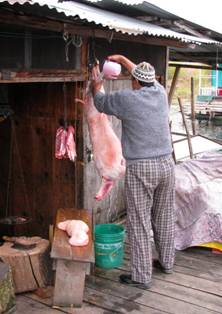
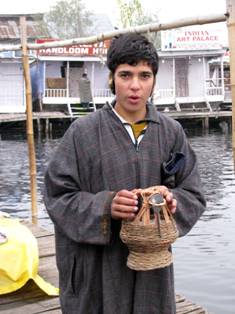
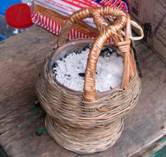
“Winter Wife” has coals in a clay pot that has an outer basket. You put it under your pancho to keep warm.
Fresh mutton for "Rogan Josh,” a Kashmir Dish Irfan with his “Winter Wife”
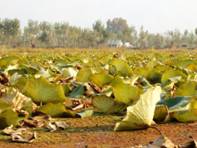
Another of the village markets near Dal GateThere is an area called the flowing gardens where there are acres of lotus plants, flowers and many kinds of grasses. Shabir told us that during the summer, there are thousands of lotus flowers and the lake looks so beautiful. Most everyone here uses the stem of the lotus flower to make a Kashmiri curry dish…it’s pretty good and very healthy.
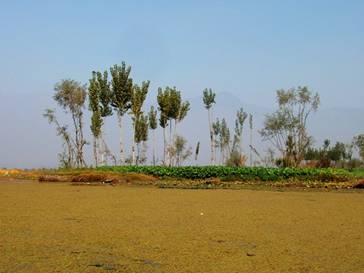
Lotus seeds for the next season and an organic garden Lotus plants starting to decay
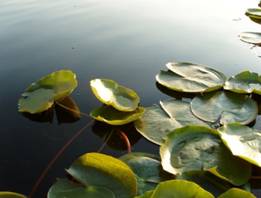
Lotus leafs flowing on the water Lotus stems from the lake are cooked in a Kashmiri curry dishSmall family farms grow a number of organic vegetables. Here, you know where your veggies come from, who grew them and you even know the farmer's name; but best of all, they come fresh to your table every day. These veggies have never been packed on a truck for transportation or refrigerated. Many of the farmers gather very early in the morning at the vegetable market to wholesale their produce to people who come by the house boats.
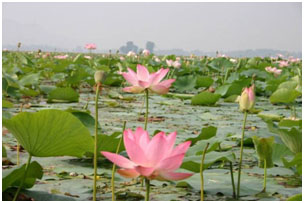
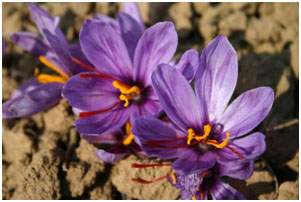
During the height of the season, there are hundreds of thousands Only the three red stamens of the Saffron flowers are used for cooking
of Lotus flowers on the lakeMany of the villagers also grow saffron flowers. Each flower has six stamens and only the red ones are used for cooking. The yellow stigmas are used to make a color mixture and are used by some Hindus to mark a yellow spot on their foreheads. The process of picking and separating the red and yellow stamens from each flower is a time consuming one. It takes a few hundred flowers to make one gram of saffron. Saffron is usually sold in one gram packages and cost about 400 rupees. There are 28 grams in one ounce
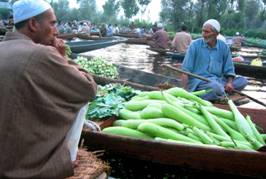
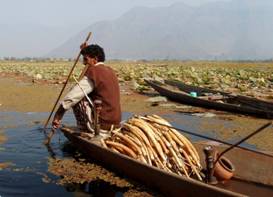
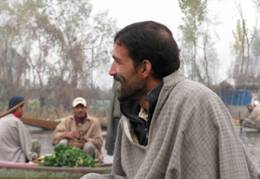
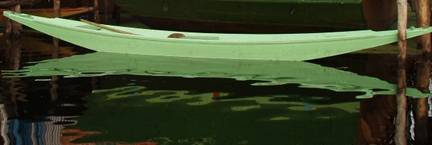
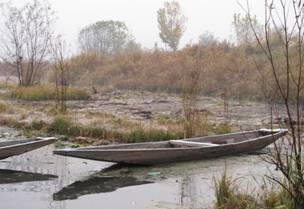
Early morning at the vegetable market Nice smile early in the morningMany of the villagers are in the “Shikara” business. These are floating taxis, the fancy ones are for the tourists and are plush. When we first arrived we all went on a very long shikara ride, about five hours around the lake. You feel like a Maharaja as they paddle you around the lake…it’s great, peaceful and very beautiful. The locals use a much simpler version of the shikaras and since this is the only way to get around the lake, I have seen the locals carry everything from refrigerators to cows in the shikaras … wait 'til you see a cow on one on these shikaras. I had my own shikara that Ibrahim lent me…it was great to have one because I went out on my own anytime I wanted to.
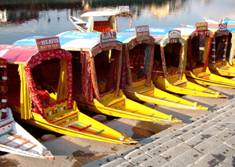
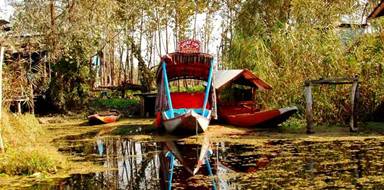
Tourist “Shikaras”, they have names like “Heavens Water Taxi”, “Honeymoon Nest”, or “Lucky Lips” snuck away among the trees
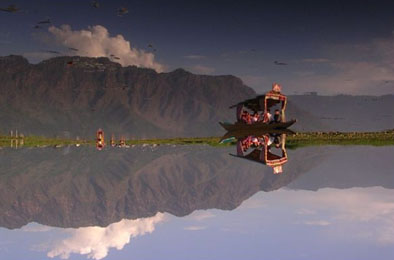
On a shikara ride (this picture is purposely turned upside down)-- The lake is crystal clear
I will miss my ShikaraWhen we first got to Srinagar, it was nice and warm. We wore shorts a few times; but as time passed, it kept getting a bit cooler each day. Towards the middle of November, there were some very cold mornings. I knew it was time to go when I woke up in the morning and could see my breath, the room was cold, no heater…thank God for the hot shower. I took 45 minute showers to warm up. However, it was really nice to see the changing of the seasons, and see the first frost set in. You could also see the change in the people as they prepared for the onset of winter…I was told that the lake freezes over. In the early morning you could feel a nice chill in the air.
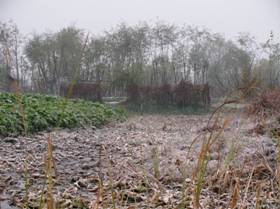
Changing of the seasons, winter is coming First frost on the ‘Shikara” and plants
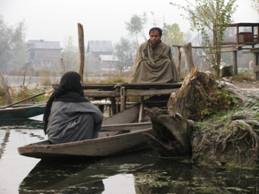
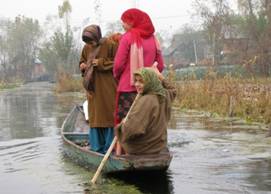
Young girls going to the village market Next to the vegetable market, cold morningThe wildlife is incredible. There are so many varieties of birds, it’s a birder's paradise. On one outing I spotted well over one hundred eagles. They have started to come down into the valleys from high up in the Himalayas for the winter.
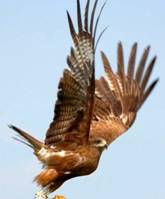
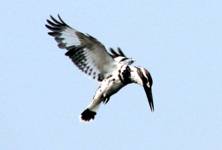
Kashmir eagle Kingfisher about to dive for a fish
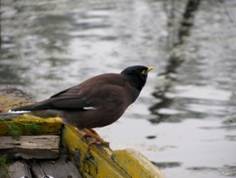
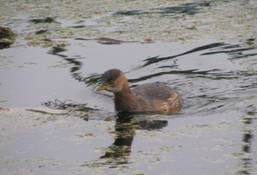
Black bird One of the many varieties of duck found on the lake
First snow around the lake, early in the morning, the town is still sleeping